Kabul/Islamabad, October 19, 2025 | Hindvaacha News Desk
In a tragic incident that has sent shockwaves through the cricketing world, three Afghan cricketers were killed in a Pakistani airstrike in Afghanistan’s eastern Paktika province.
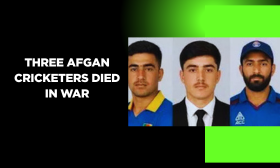
The Afghanistan Cricket Board (ACB) confirmed that three Afghan cricketers, Kabeer Agha, Sibghatullah, and Haroon, all young domestic players, lost their lives when an airstrike hit the Urgun district. The players were returning home after a local cricket match and were attending a community gathering at the time of the attack.
⚠️ The Attack and Aftermath
According to local media reports, Pakistan’s air force conducted cross-border air raids along the Afghanistan-Pakistan frontier on the night of October 17, targeting alleged militant hideouts. However, the strike also claimed civilian lives — including the three young sportsmen.
In response, the Afghanistan Cricket Board has announced its withdrawal from the upcoming T20 Tri-Nation Series that was to feature Pakistan, Sri Lanka, and Afghanistan in Karachi later this month.
Why this is politically significant
- Border and ceasefire violation issues
- The Pakistani-Afghan border (along the so-called Durand Line region) has long been a site of tension: Pakistan accuses Afghanistan of harbouring or tolerating militant groups (e.g., TTP) that launch attacks into Pakistan; Afghanistan (now under Taliban governance) denies full control of all territories or rejects Pakistani over-claims.
- The reported air-strike during a ceasefire undermines trust and raises questions over sovereignty, civilian protection and the enforcement of agreed de-escalation mechanisms.
- Civilian casualties and public diplomatic fallout
- The killing of three sportspersons (cricketers) gives the event a particularly emotional and symbolic dimension beyond standard military strikes. It generates domestic outrage in Afghanistan, international attention, and implications for diplomacy.
- Sporting ties (cricket) between Pakistan and Afghanistan become entangled in the political/military conflict — what might normally be a “friendly” or neutral sphere becomes a site of protest and withdrawal.
- Internal dynamics in Afghanistan and Pakistan
- In Afghanistan, the strike and especially deaths of young men raise questions of Taliban-led government ability to protect its people, and may affect its legitimacy among certain populations.
- In Pakistan, domestic demand for a hard line against militants may push for continuing cross-border operations — but risks escalation with Afghanistan and destabilisation of already fragile relations.
- The incident may affect third-party mediation efforts (e.g., via Qatar, Turkey) and how each country portrays the conflict externally.
- Regional implications
- Other regional actors (India, Iran, China) monitor Pakistani-Afghan dynamics; the escalation may open windows for outside influence or complicate regional security.
- International organisations (UN, human rights bodies) may raise concerns about cross-border strikes, civilian casualties, and violation of international law — raising reputational costs.
- Sports diplomacy is impacted: cricket series get cancelled, affecting bilateral relations beyond just security.
What are the current developments
- Both countries have agreed to resume peace talks in Istanbul (with mediation from Turkey & Qatar) after a dialogue deadlock. Reuters+1
- The border remains volatile; the ceasefire agreement has been breached multiple times and evidence of civilian casualties continues to mount. Al Jazeera+1
- The Afghanistan side has used the cricketers’ deaths as a diplomatic and symbolic point of protest (withdrawal from series) and may push for international condemnation.
What is at stake & possible scenarios
- If the escalation continues, there is risk of a wider military confrontation across the border: cross-border strikes, retaliations, and disruption of civilian lives in border provinces.
- The trust required for effective border management and counter-terror cooperation may erode, making both countries less able to manage militant flows, and increasing instability.
- The cultural/people-to-people links (sporting contacts, travel, trade) will suffer — further isolating or polarising the populations.
- On the flip side: If talks succeed, this incident might become a turning point that pushes both sides toward better mechanisms (e.g., transparency on strikes, civilian casualty mitigation, shared border management).
- For Afghanistan’s cricket community: The loss of promising cricketers is a blow — both emotionally and for the sport’s development; it also sends a message that domestic infrastructure and basic safety are at risk in conflict zones.
Why the killing of cricketers matters beyond just a military strike
- Sport is a soft-power domain: deaths of athletes draw public/ international attention in ways that purely military casualties sometimes don’t. It humanises the costs and can mobilise public opinion.
- They may become symbolically powerful: the narrative of “young sportsmen killed while playing” is easier to rally behind, and may influence broader public sentiment in Afghanistan and abroad.
- The cancellation/withdrawal of sports events (like the Tri-Nation series) has diplomatic ripple effects — reducing bilateral engagement, reducing venues for dialogue, and making reconciliation harder.
Key points to watch
- Whether the talks in Istanbul produce a tangible ceasefire mechanism and citizen-safety guarantees (rather than just verbal agreements).
- If Pakistan offers any accountability or explanation for the strike (civilian casualties, target verification) and if Afghanistan demands or receives one.
- Whether the international community (especially cricketing bodies, human-rights organisations) takes up the case, which could raise external pressure.
- How the border provinces in Afghanistan (like Paktika, Urgun) respond: increased militarisation, displacement, local grievances.
- Whether Afghanistan uses the incident to shift its diplomatic alliances (towards Pakistan or elsewhere) or uses sport as a means of protest.
🏏 Global Reactions
The International Cricket Council (ICC) and the Board of Control for Cricket in India (BCCI) have both condemned the attack and expressed deep sorrow.
The ICC issued a statement saying:
“Cricket is a game that unites nations beyond borders. The loss of three promising Afghan cricketers is a tragedy for the entire cricketing fraternity.”
Indian cricketing figures and fans also expressed condolences across social media, calling it a “black day” for the sport.
💬 ACB’s Statement
ACB Chairman stated —
“These young men represented the spirit and hope of Afghan cricket. Their loss is not only personal but a blow to the soul of our nation’s favorite sport.”
🌍 Political Context
The tragedy comes amid rising tensions between Pakistan and Afghanistan, following a series of cross-border attacks and disputes over security operations. Analysts believe the incident could further strain diplomatic relations between the two neighboring countries.
🕯️ Mourning in the Cricket World
Afghan stars Rashid Khan and Mohammad Nabi took to social media to express grief, calling the day “a dark chapter in Afghan cricket.” Tributes poured in from fans, teammates, and international players alike.
Hindvaacha Analysis:
This heartbreaking event serves as a reminder that war and politics continue to overshadow peace and sportsmanship. The world of cricket — often seen as a symbol of unity — now mourns yet another loss to violence.
2 Comments