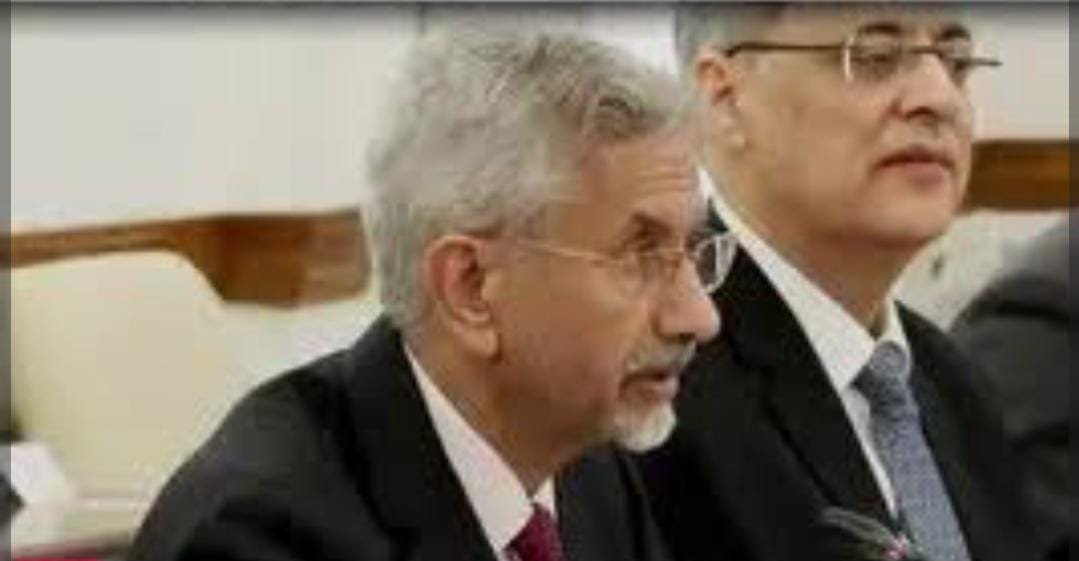
India and Bahrain reaffirm support for Gaza peace at the 5th Joint Commission Meeting in New Delhi. Dr. S. Jaishankar calls for lasting regional stability and humanitarian relief.
In a significant diplomatic development, India reaffirmed its steadfast support for peace and stability in Gaza during the 5th India–Bahrain High Joint Commission Meeting held in New Delhi. The meeting, co-chaired by External Affairs Minister Dr. S. Jaishankar and Bahrain’s Foreign Minister Dr. Abdullatif bin Rashid Al Zayani, focused on strengthening bilateral cooperation while addressing pressing regional and global challenges — including the ongoing crisis in the Middle East.
During his address, Dr. Jaishankar reiterated India’s commitment to the Gaza peace process, urging all stakeholders to pursue dialogue, humanitarian cooperation, and long-term stability. The reaffirmation of support comes at a crucial moment as the humanitarian situation in Gaza continues to draw international concern.
India’s Message: Peace Through Dialogue and Diplomacy
In his remarks, Dr. S. Jaishankar emphasized that India continues to stand for peaceful resolution and coexistence in the Middle East. He underlined the importance of restraint, humanitarian protection, and respect for international law, stressing that the two-state solution remains the most viable path to ensuring lasting peace between Israel and Palestine.
“India supports all efforts aimed at restoring peace and stability in Gaza. We believe that dialogue and diplomacy are the only ways forward,” Dr. Jaishankar stated during the session.
The Indian minister’s remarks were warmly welcomed by the Bahraini delegation, which echoed India’s vision for a peaceful and prosperous West Asia. Both sides expressed concern over the escalating humanitarian crisis in Gaza and agreed on the urgent need for international cooperation to ensure the delivery of humanitarian aid and reconstruction assistance. The Economic Times
Bahrain and India: Shared Vision for Regional Stability
The 5th India–Bahrain High Joint Commission meeting marked an important step in deepening strategic, economic, and political ties between the two nations. The two sides reviewed their cooperation in defence, energy, space, fintech, healthcare, and trade.
However, the Middle East peace process took center stage, reflecting both nations’ growing alignment on regional and global issues.
Bahrain, a key Gulf ally and a signatory of the Abraham Accords, appreciated India’s balanced and principled foreign policy — particularly its ability to maintain cordial relations with both Israel and Palestine while promoting peace through constructive dialogue.
Dr. Al Zayani noted Bahrain’s appreciation for India’s consistent support for humanitarian efforts in Gaza, adding that both countries are committed to promoting security and cooperation across the Gulf and the broader West Asian region.
India’s Humanitarian Stand and Moral Commitment
India’s reaffirmation of support for Gaza is not merely a diplomatic gesture — it reflects New Delhi’s enduring humanitarian approach to global conflicts.
Over the years, India has provided medical aid, food supplies, and financial assistance to Gaza through multilateral organizations such as the United Nations Relief and Works Agency (UNRWA). The country’s foreign policy continues to draw inspiration from the principle of Vasudhaiva Kutumbakam — the world is one family.
India’s balanced diplomacy allows it to maintain strong relations with Israel in the fields of defence and technology while continuing to advocate for Palestinian sovereignty and humanitarian rights. This delicate equilibrium showcases India’s global role as a bridge-builder and advocate for peace.
A Broader Diplomatic Message to the World
Dr. Jaishankar’s reaffirmation of support for Gaza peace sends a broader message to the international community: India is committed to being a responsible global voice that stands for dialogue, coexistence, and human dignity.
In recent years, India has played an increasingly visible role in global peace and development forums, including the United Nations, G20, and the Non-Aligned Movement (NAM).
By aligning with Bahrain — a key partner in the Gulf — India reinforces its position as a stabilizing influence in West Asia, advocating cooperation over confrontation. The meeting also highlighted India’s growing footprint in the Gulf region, where millions of Indian expatriates contribute to economic and social development.
Strengthening Bilateral Relations Beyond Politics
Beyond regional politics, the 5th Joint Commission Meeting resulted in the signing of several agreements on defence collaboration, fintech innovation, digital transformation, and renewable energy.
Both nations agreed to explore new opportunities in space technology and cybersecurity, marking a leap forward in their strategic partnership. Dr. Jaishankar noted that India’s growing cooperation with Bahrain aligns with New Delhi’s broader “Act West” policy, aimed at enhancing connectivity, trade, and cultural relations with Gulf nations.
India’s Call for Global Cooperation in Gaza Relief
Dr. Jaishankar also called upon the international community to unite in delivering humanitarian assistance to Gaza, stressing that innocent lives should never be caught in the crossfire of conflict.
“We urge all sides to prioritize human life, uphold international humanitarian law, and ensure the safe passage of aid to those in need,” he said.
India’s message reflects a growing global consensus that lasting peace in Gaza requires more than ceasefire agreements — it requires rebuilding trust, infrastructure, and hope.
Conclusion: A Shared Vision for Peace and Prosperity
The 5th India–Bahrain High Joint Commission Meeting in New Delhi stands as a milestone in strengthening not just bilateral ties but also India’s moral and diplomatic leadership in global affairs.
By reaffirming support for the Gaza peace plan, Dr. S. Jaishankar has reinforced India’s identity as a nation that stands for humanity, dialogue, and justice.
As Bahrain and India move forward in partnership, their shared message resonates across the Middle East: true peace can only emerge from compassion, cooperation, and the courage to talk, even amid tension.
India’s voice remains clear — peace is not the absence of conflict but the triumph of understanding.
© 2025 Hindvaacha.com | News | Visit For More
2 Comments