Gujarat ATS Busts Espionage Network; Subedar and Woman Arrested for Passing Classified Data to Pakistan
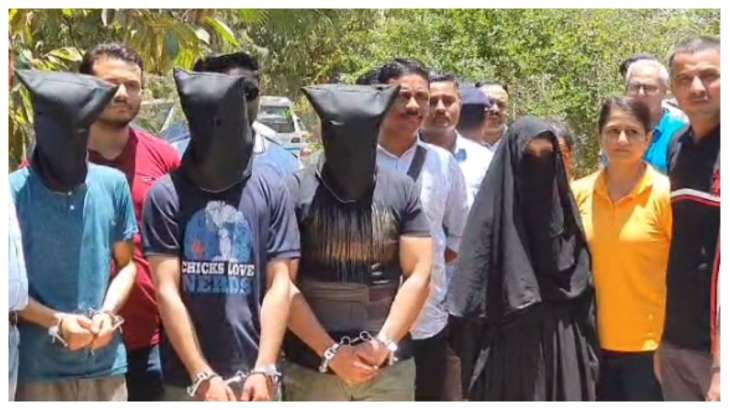
Ahmedabad — In a major intelligence breakthrough, Gujarat ATS (Anti-Terrorism Squad) announced on December 4, 2025, that it has dismantled a clandestine espionage ring linked to Pakistan. Two individuals — a serving Indian Army Subedar and a woman — were taken into custody for allegedly transmitting classified information. Lokmat Times+2Big News Network+2
The Arrests: Who Are the Suspects?
According to ATS, the male accused has been identified as AK Singh, a Subedar in the Indian Army. He was residing in Goa at the time of his arrest. Lokmat Times+2The Times of India+2 The second suspect is a woman identified as Rashmani Pal, who was living in Daman. LatestLY+1 According to the ATS statement, both were allegedly in contact with Pakistani handlers and were passing on sensitive and classified information. Big News Network+2@mathrubhumi+2
At this stage, ATS has not publicly disclosed the exact nature of the classified information, or how the duo communicated with their handlers — though the agency emphasized that the breach was serious and threatened national security. Lokmat Times+2Big News Network+2
Significance and Gravity of the Case
The arrest of a serving Army Subedar is particularly alarming. Members of the armed forces hold positions of trust and access to highly sensitive information; any breach by someone from within can cause damage far greater than external threats. The involvement of a woman civilian based in Daman suggests a possible wider network — raising concerns over sleeper or support cells operating across state boundaries and union territories.
Officials from ATS have reportedly declared the case a high-priority national security matter. Investigators have already begun interrogations and forensic examination of digital devices, communications, and banking transactions. Navbharat Times+2Big News Network+2 The agency is working to determine whether the two suspects acted alone, or whether there are others involved — potentially including handlers or facilitators located outside India.
The case has revived ongoing concerns about cross-border espionage and infiltration, especially trends where agents use social media, encrypted apps or personal contacts to recruit individuals within India. In recent months, ATS has arrested several alleged spies — from health workers to ex-servicemen — accused of sharing sensitive defence and security-related information with foreign intelligence. The New Indian Express+2Ahmedabad Mirror+2
Official Response and What’s at Stake
In a statement, Gujarat ATS officials said they acted on actionable intelligence that pointed to “unusual communication and data transfers” between the suspects and external contacts believed to be based in Pakistan. The investigation is expanding — ATS has sought cooperation from central agencies and military intelligence to trace the full extent of the network. Big News Network+1
Security analysts say that the episode underscores the persistent challenge India faces from espionage and intelligence leaks. With evolving technology and more sophisticated communication channels (like encrypted messaging apps), the risk of infiltration and unauthorized data transmission has increased manifold. The arrests send a strong warning to potential sleeper agents and double-agents: the possibility of detection remains real, and national security agencies are watching closely.
What Remains Unknown — and What Comes Next
Several critical questions remain unanswered:
- Exactly what classified information had been passed — whether it pertained to military plans, border defence, troop movements, infrastructure, or other sensitive data.
- Who were the external handlers — whether linked to a known foreign agency (like Inter‑Services Intelligence, ISI) — and how deep does the network go.
- Whether there are more accomplices, either inside the defence establishment or external civilians, working as couriers, informants or facilitators.
- How long this network had been operating before the bust — whether it was a recent recruitment or a long-term infiltration.
Investigators have reportedly launched forensic and digital investigations and are seeking to establish the chain of custody of the data transmissions, financial transactions (if any), and pattern of communication. ATS has also alerted central and local security agencies to remain vigilant. Big News Network+2@mathrubhumi+2
Broader Context: A Pattern of Espionage Arrests
This incident is part of a broader crackdown by Gujarat ATS and allied agencies in recent months. In May 2025, the ATS arrested a health worker from Kutch for allegedly sharing photos and videos of border security and navy installations with a Pakistani agent. The New Indian Express+2The Indian Express+2
Another case from 2024 involved a labourer from Porbandar who reportedly shared details about Coast Guard vessels to a Pakistani handler over WhatsApp. India Today+1 These repeated incidents suggest that intelligence agencies are uncovering a persistent, multi-layered effort by foreign actors to gather strategic information — often using civilian intermediaries or insiders inside sensitive establishments.
Security experts warn that as long as such recruitment tactics — via social media, fake profiles, money, or coercion — remain viable, the threat of espionage will remain high. The latest arrests are likely to trigger a thorough review of internal security protocols within the armed forces, defence establishments, and civilian agencies across sensitive zones.
Conclusion
The arrest of Subedar AK Singh and Rashmani Pal by Gujarat ATS represents a serious breach of trust and a stark reminder of the enduring threat of espionage. While the full extent of the damage is yet to be determined, the case has exposed vulnerabilities within India’s defence infrastructure and intelligence apparatus.
In the coming days, as investigations deepen, more details may emerge — potentially revealing the scale of the network, its operatives, and the external handlers behind it. For now, the arrests have sent a strong signal that Indian security agencies remain vigilant and proactive in countering espionage, regardless of how deep the infiltration runs.
Read More Articles : HERE
Cyclone Ditwah — Widespread Devastation in Sri Lanka, India Braces as Landfall Nears – Hindvaacha
1 Comment