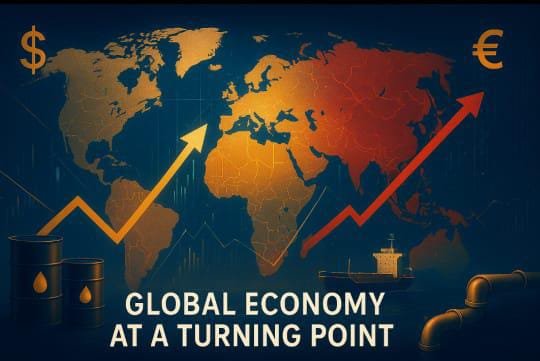
Global Economic Pulse: How Geopolitics, Energy & Markets Are Reshaping the World Economy
Global economic trends explained: geopolitics, energy markets, inflation, emerging economies, and how global events are reshaping the world economy in 2025.
The global economy is entering a decisive phase as geopolitical tensions, energy realignments, and shifting trade policies redefine financial stability across regions. From strained relations between major oil producers to slowing growth in developed economies and cautious optimism in emerging markets, economic signals from around the world reflect both uncertainty and opportunity.
Geopolitical Tensions and Economic Ripples
One of the most significant factors influencing the global economic climate is rising geopolitical friction. Tensions involving major energy producers and global powers have once again placed oil, gas, and strategic trade routes at the center of international concern. Disruptions or legal actions involving oil shipments have created volatility in crude prices, impacting inflation and currency stability in importing nations.
Meanwhile, ongoing conflicts and diplomatic standoffs in parts of Eastern Europe, the Middle East, and Southeast Asia continue to strain global supply chains. These developments have forced multinational corporations to rethink sourcing strategies, resulting in higher production costs and delayed deliveries.
Energy Markets: The New Economic Battleground
Energy remains the backbone of the global economy, and its pricing has become increasingly politicized. Oil prices have fluctuated sharply in recent weeks due to uncertainty over production levels, sanctions, and shipping security. Natural gas markets, especially in Europe and Asia, are also under pressure as countries rush to secure long-term supply contracts ahead of future demand surges.
Renewable energy investments are growing, but fossil fuels still dominate global consumption. Economists warn that unless energy markets stabilize, inflationary pressures may persist well into the next fiscal year, particularly in developing economies heavily dependent on imports.
United States and Europe: Slow Growth, Policy Debates
The United States economy is showing signs of moderation after years of aggressive interest rate hikes aimed at curbing inflation. While employment figures remain relatively strong, consumer spending has slowed, and political debates over healthcare, public spending, and subsidies are creating uncertainty for investors.
In Europe, economic growth remains fragile. High interest rates, energy costs, and weak industrial output have challenged recovery efforts. Several European governments are balancing fiscal discipline with social welfare demands, as public discontent rises over cost-of-living pressures.
Emerging Markets: Cautious Optimism
In contrast, many emerging economies are demonstrating resilience. Countries in South Asia, Latin America, and parts of Africa are benefiting from diversified trade partnerships, domestic consumption, and infrastructure investment. India, in particular, continues to be viewed as a global growth engine due to strong manufacturing output, digital expansion, and demographic advantage.
However, emerging markets are not immune to global shocks. Capital outflows, currency volatility, and debt repayment challenges remain key risks, especially as global interest rates stay elevated.
Trade, Technology, and the Changing Order
Global trade is undergoing a structural transformation. Protectionist measures, strategic tariffs, and technology restrictions have reshaped international commerce. Nations are increasingly prioritizing “friend-shoring” and regional trade alliances over traditional globalization models.
At the same time, technological innovation—particularly in artificial intelligence, automation, and digital finance—is redefining productivity and labor markets. While technology promises long-term growth, it also raises concerns about job displacement and inequality, especially in developing regions.
Outlook: Uncertainty with Opportunity
Economists agree that the global economy is at a crossroads. While short-term risks remain high due to geopolitical instability and financial tightening, long-term opportunities exist in green energy, digital infrastructure, and emerging consumer markets.
International cooperation, transparent trade policies, and responsible fiscal management will be critical in navigating this complex economic landscape. As nations adapt to a rapidly changing world, the balance between national interests and global stability will determine the direction of the world economy in the years ahead.
In a world increasingly shaped by interconnected risks, global economics is no longer just about numbers—it is about diplomacy, security, and sustainable growth.
How Sovereign Wealth Funds Are Reshaping the World Economy: A Global Revolution – Hindvaacha
1 Comment