

Thailand–Cambodia Tensions Escalate as Thailand Launches Air Strikes Near Disputed Border
December 2025 — Southeast Asia:
A fragile peace between Thailand – Cambodia has once again shattered, as renewed border clashes pushed the region into a state of heightened military alert. Thailand launched air strikes near its disputed eastern frontier after a deadly exchange of fire early Monday morning, triggering panic among civilians and raising fears of a broader regional conflict.
Clashes Erupt at Dawn
According to Thai military officials, the violence began before sunrise when Cambodian forces allegedly opened fire on a Thai outpost in Ubon Ratchathani province. The skirmish reportedly resulted in the death of one Thai soldier and left four others injured. Thai authorities described the attack as an “unprovoked act of aggression” and said they were compelled to respond immediately.
Within hours, the Royal Thai Air Force carried out targeted air strikes on what it said were Cambodian military positions located just across the border. The Thai government stated that the operation was conducted in self-defence to neutralize heavy weapons that Cambodia had allegedly moved into the contested zone.
Cambodia, however, strongly rejected this narrative. Its Ministry of Defence accused Thailand of launching a “sudden and unjustified offensive” without any provocation. Cambodian officials insisted that their forces were operating strictly within their own territory and had not initiated any form of attack.
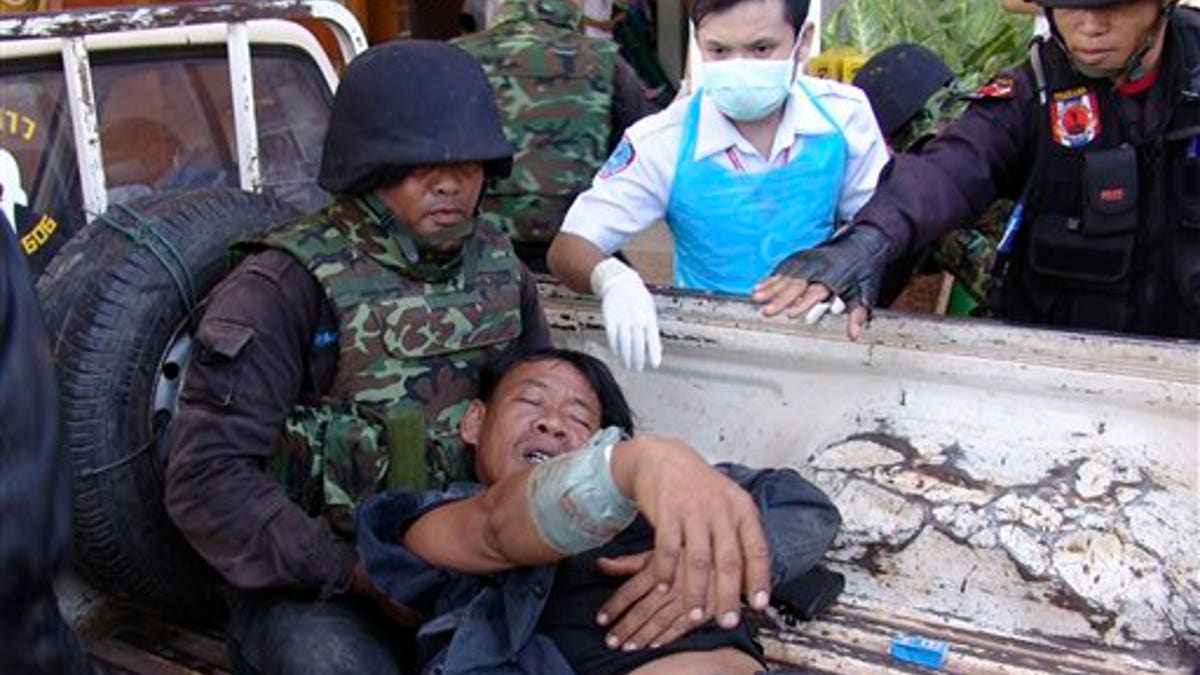
Civilian Impact and Rising Humanitarian Concerns
The escalation has put thousands of civilians at risk. Local authorities in Thailand confirmed that more than 35,000 residents were evacuated from border villages due to fears of expanding military action. Temporary shelters and emergency response camps have been set up in schools, temples, and community centers.
On the Cambodian side, officials reported the deaths of several civilians, including women and children, as a result of the strikes. Over a dozen others were injured, and many families have begun fleeing deeper into Cambodian territory to escape the violence.
Eyewitnesses described scenes of chaos — smoke rising from forested border hills, heavy artillery echoes, and long queues of families carrying their belongings on foot or riding motorcycles toward safer locations.
Humanitarian organizations have already raised concerns about a potential mass displacement crisis if both sides fail to de-escalate quickly.
A Conflict Rooted in History
The Thailand–Cambodia border dispute is not new. The conflict traces its origins back to the early 20th century, when colonial-era maps drawn by the French created longstanding ambiguities in the demarcation of territories. Although the International Court of Justice issued key rulings in the 1960s and again in the 2010s, several stretches of the border remain hotly contested.
The two nations have fought multiple skirmishes over the decades. The most intense clashes in recent memory occurred in mid-2025, when a five-day border confrontation left hundreds injured and forced nearly three hundred thousand civilians to flee their homes. That crisis ended with an externally brokered ceasefire, but the agreement has remained fragile.
Tensions resurfaced in November when a landmine explosion injured Thai troops. Thailand accused Cambodian-backed groups of planting the device, though Cambodia denied involvement. Analysts have since warned that the ceasefire was weakening and that a return to conflict was possible.
Political and Diplomatic Fallout
Thailand’s Prime Minister stated that the air strikes were “necessary to protect national sovereignty” and emphasized that Thailand remained committed to peace. However, he added that any threat to Thai forces or civilians would be met with “decisive and proportionate action.”
In contrast, Cambodia’s government condemned the strikes as a “serious violation of international law and territorial integrity.” Cambodian leaders have demanded an emergency meeting with ASEAN and called for stronger international condemnation of Thailand’s actions.
Both countries have also begun reinforcing troops in strategic areas, heightening fears of a prolonged standoff.
Regional and International Reactions
The conflict has drawn immediate responses from neighboring countries and international organizations. Members of the Association of Southeast Asian Nations (ASEAN) expressed deep concern and urged both sides to exercise restraint. Several nations called for an emergency regional dialogue to prevent the situation from escalating further.
Independent conflict analysts warn that, if not contained swiftly, the clashes could evolve into the most serious military confrontation the region has seen in years. Trade routes, border economies, and cross-border communities are already experiencing disruptions.
International observers also worry that the political climate in both nations could fuel further aggression. Domestic pressure, nationalism, and upcoming political deadlines may influence decision-makers to take harder stances instead of seeking compromise.
The Path Ahead: Peace or Prolonged Conflict?
As of now, the border remains tense but relatively quiet following the initial exchange. Both sides are reportedly monitoring each other’s troop movements closely, and negotiations have yet to begin. Military analysts say the next 72 hours may determine whether the two countries step back from the brink or plunge deeper into conflict.
For the civilians living near the frontier, fear continues to overshadow hope. Many are uncertain when they will be able to return home or whether the violence will expand into a wider war.
What remains clear is that the renewed fighting has exposed once again how vulnerable Southeast Asia’s peace can be when historic grievances, military miscalculations, and political tensions collide.
Unless urgent diplomatic efforts intervene, the region may be witnessing the beginning of another prolonged and dangerous border crisis between Thailand and Cambodia.
Resources: Mint, The Star, The Indian Express
More Articles: HERE
India, Russia Approve RELOS: Pact Paves Way for Access to Arctic and Indian Ocean Bases – Hindvaacha

Pingback: United States–Venezuela Tensions Escalate After Seizure of Sanctioned Oil Tanker - Hindvaacha