

India’s DRDO Turns Sci-Fi Into Reality: Fighter Jets Get “Morphing Wings”
In a major leap for Indian aerospace and defence capability, DRDO has announced a successful test of a “morphing wing” — a futuristic technology that allows aircraft wings to change shape mid-flight. What was once the domain of science fiction or long-term theoretical research is now stepping into real flight-capable hardware, marking a milestone in India’s pursuit of next-generation combat aircraft. Navbharat Times+1
What exactly is “Morphing Wing” Technology?
Traditional aircraft wings have fixed structures with flaps, slats or other mechanical surfaces to manage lift, drag, manoeuvrability, and other aerodynamic requirements. But such systems come with compromises: mechanical hinges, gaps or seams that reduce stealth and aerodynamic efficiency — and a fixed wing geometry that must strike a balance between climb, cruise, manoeuvre, and combat needs.
Morphing-wing technology, by contrast, uses smart materials — in this case, shape-memory alloys (SMAs) — embedded in the wing structure. These alloys contract when electrically heated and expand when cooled, enabling the wing’s geometry to change dynamically: adjusting camber, curvature or leading-edge droop in real time, without traditional hinges or joints. This allows the wing to adapt to different flight phases — takeoff, climb, cruise, or combat — to optimize lift, drag, stealth and agility. Indian Defence News+1
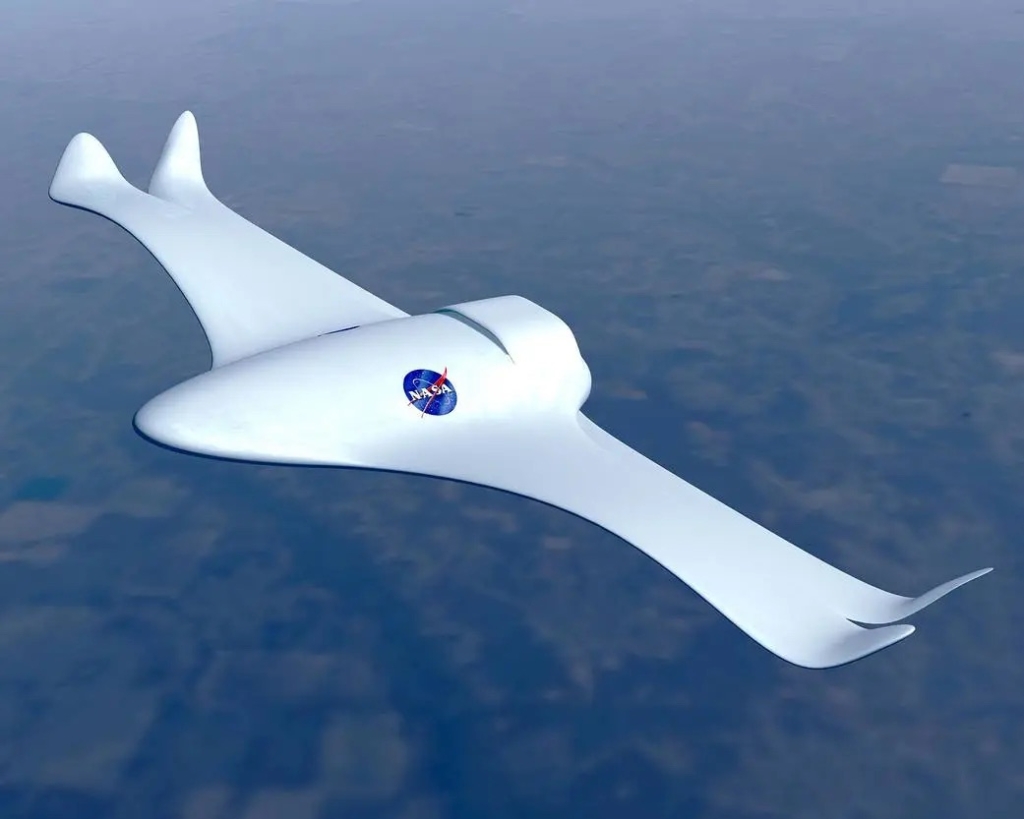
The DRDO Achievement: From Theory to Flight-Ready Prototype
The recent breakthrough is not just a concept or wind-tunnel result — DRDO successfully demonstrated a flight-capable morphing wing segment. The test used a small 300-mm wing model (a Micro Air Vehicle-class prototype), but under real airflow conditions. The results:
- The wing segment responded at up to 35 degrees per second, even under full propeller wash (simulating real flight airflow). Indian Defence News+1
- The shape change — from flat to full droop — could be completed in just 0.17 seconds. Indian Defence News+1
- Crucially, because the wing skin remains continuous, without traditional flaps or slats, the airframe retains a smooth surface, minimizing radar reflections — a major plus for stealth. Indian Defence News+1
According to DRDO, this demonstration validates the feasibility of real-time wing morphing under aerodynamic load and flow — a challenge that has long stymied aircraft designers worldwide. Indian Masterminds+1
Why This Matters — For Aerodynamics, Stealth and Future Combat Jets
The significance of morphing-wing technology is multifold:
- Adaptive Aerodynamics: A wing that re-shapes itself during different mission phases can optimize performance — more lift during takeoff, lower drag during cruise, and enhanced manoeuvrability during turns or combat. This eliminates the compromise of fixed-wing designs.
- Stealth Advantage: Traditional control surfaces (flaps, slats, ailerons) require hinges and produce discontinuities on the wing surface — potential radar reflectors. A morphing wing’s smooth, gapless surface reduces radar cross-section, making jets harder to detect. Indian Defence News+1
- Operational Flexibility: For next-generation fighters (or even unmanned aerial vehicles — UAVs), morphing wings could enable a single airframe to excel across multiple roles: long-range patrol, high-agility dogfights, stealth penetration missions, and more.
- Indigenous Capability & Self-Reliance: That DRDO — and by extension India’s defence sector — has moved this from theory to demonstrable hardware underlines the country’s growing maturity in advanced aerospace R&D. It positions India alongside a small group of nations actively working on “adaptive-geometry” aircraft. Navbharat Times+1
What’s Next: From Prototype to Full-Scale Combat Jets
While the current demonstration was on a small-scale wing segment, DRDO’s next challenge is scaling this up: designing full-sized wings suitable for future combat jets or UAVs. According to reports, the goal is to integrate such morphing wings (along with other advanced technologies) into next-generation Indian jets — possibly beyond the ongoing developments under the Advanced Medium Combat Aircraft (AMCA) and future unmanned combat platforms. Indian Defence News+1
Scaling up will involve engineering solutions for: structural strength under high aerodynamic loads, power management for SMAs across larger wing surfaces, reliable actuation under varied mission profiles, and integration with stealth, avionics, and other systems. DRDO seems confident about overcoming these — signalling a long-term roadmap for India’s air-power modernization. Indian Masterminds+1
Context: Global Efforts, But India Makes a Mark
Globally, morphing-wing research has been ongoing for decades — by aerospace firms, research organisations, and defence agencies in the US and Europe. However, many such efforts remained at conceptual or wind-tunnel stages; real flight-worthy demonstrations under load have been rare. Indian Defence News+1
That makes DRDO’s success significant: for the first time, an Indian defense R&D organization has validated morphing-wing behavior under real airflow — an achievement that places India among a select group of nations pushing the frontiers of aerospace technology.
What This Means for India’s Strategic Future
In an era where air dominance, stealth, and technological edge matter more than ever, morphing-wing technology could give India a qualitative edge — especially in contested environments where radar evasion, manoeuvrability, and multi-role flexibility are vital.
- For the Indian Air Force (IAF) and future indigenous jets, it portends greater operational flexibility and survivability.
- For UAVs and unmanned combat platforms, morphing wings could dramatically extend endurance, stealth, and mission adaptability.
- For India’s defence-industrial ecosystem, this success reinforces the country’s path toward self-reliance and indigenous high-tech innovation — reducing dependence on foreign imports and partnerships.
Conclusion
DRDO’s recent successful test of morphing-wing technology marks a turning point in Indian aerospace — a transformation from blue-sky research to real, flight-capable hardware. Through smart materials and innovative engineering, what was once relegated to speculative or conceptual designs has now entered the realm of practical possibility.
As India readies its next-generation combat and unmanned aircraft, morphing wings may well become a standard — redefining how aircraft fly, fight, and survive. The sky is no longer the limit; perhaps, for Indian aviation, it’s only the beginning.
August AI: India’s Free 24×7 Health Companion Transforming Digital Healthcare – Hindvaacha
India Unveils a Game-Changing Airbase in Ladakh: A Strategic Leap for National Security – Hindvaacha
Read more articles – HERE