
India, Russia Approve RELOS: Pact Paves Way for Access to Arctic and Indian Ocean Bases
The India–Russia RELOS Agreement marks a major boost to bilateral defence ties, enabling mutual access to military facilities, streamlined logistics support, and enhanced strategic reach from the Arctic to the Indian Ocean. Learn how this landmark pact strengthens operational readiness and global cooperation.
On 18 February 2025, India and Russia formally signed the “Reciprocal Exchange of Logistic Support” — or RELOS — agreement. The signatories were the Indian Ambassador to Russia and the Russian Deputy Defence Minister. Indian Defence News+2IDRW+2
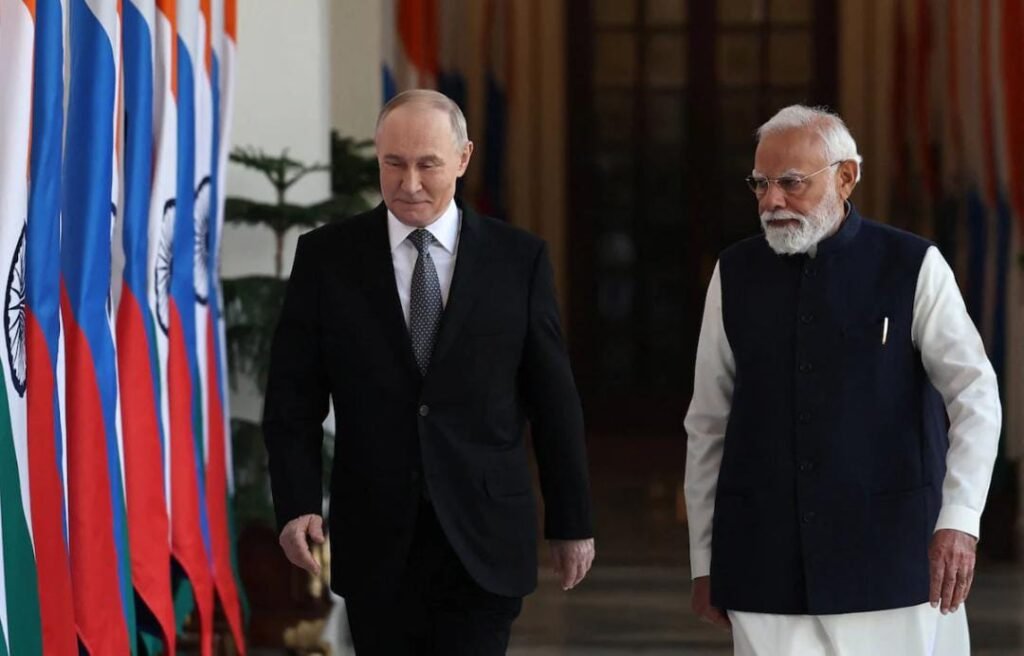
After months of deliberation, the pact was ratified by Russia’s lower house of parliament — the State Duma — in early December 2025. The ratification came just days before Russian President Vladimir Putin landed in New Delhi (4–5 December 2025) for a high-profile state visit to meet Indian Prime Minister Narendra Modi, underscoring its diplomatic-strategic importance. Business Standard+2Indian Defence News+2
In essence, RELOS establishes a formalised framework that allows the armed forces of both countries — India and Russia — to access each other’s military bases, ports, airfields; and receive logistical support such as refuelling, maintenance, berthing or anchorage, resupply of fuel/spares, and other support during joint operations, exercises, or agreed-upon missions. India Today+2Defence Professionals+2
What the Agreement Allows: The Core Provisions
Under the RELOS agreement, the two countries gain reciprocal rights to:
- Use of military facilities and infrastructure: Warships, aircraft, and personnel from one country can visit or be deployed to the other country’s military bases, ports, or airfields — with access to support services. The Times of India+2Business Standard+2
- Logistical support and maintenance: This includes refuelling, spare parts, food and rations, resupply, repairs, berthing/anchoring for ships, hangars/air-support for aircraft — ensuring that deployments and movements are sustainable. Indian Defence News+2Business Standard+2
- Applicability beyond wartime: The pact covers joint military exercises, training missions, humanitarian operations, disaster-relief efforts, and other mutually agreed activities — not just war or conflict scenarios. ETManufacturing.in+2The Economic Times+2
- Use of airspace and ports during deployments: Both sides get rights to each other’s airspace and naval ports, facilitating smoother movement of forces, ships or aircraft across long distances. India Today+2The Times of India+2
As described by Russia’s Duma after ratification, the pact “sets the procedure” for dispatching military formations, warships, and military aircraft between the two nations — regulating both the movement and logistics support under a formal agreement rather than ad-hoc arrangements. India Today+2IDRW+2
Strategic Implications — What This Means for India and Russia
Expanded Operational Reach
For India, RELOS opens the door to access Russian military facilities — including potentially remote ports and bases along Russia’s Arctic, Far East, and Northern Sea Route (from Vladivostok to Murmansk). This could significantly extend the operational and maritime reach of the Indian Navy and Air Force beyond the Indian Ocean — opening up new theatre opportunities. Business Standard+2Defence Professionals+2
On the flip side, Russia gains greater presence in the Indian Ocean Region via Indian naval and air installations (such as at southern or island bases) — giving it warm-water access and enhanced flexibility without the need to build permanent foreign bases. Business Standard+2Dainik Jagran English+2
Enhanced Military Cooperation & Interoperability
With streamlined logistics, both countries can conduct joint exercises, training, disaster relief, humanitarian missions, or even coordinated deployments with fewer bureaucratic hurdles. This improves interoperability and builds trust between the armed forces. ETManufacturing.in+2Defence Professionals+2
In geopolitical terms, RELOS brings India’s defence cooperation with Russia more in line with existing pacts it has with other major powers — facilitating a network of logistic-support agreements that give New Delhi strategic flexibility. Business Standard+1
Signalling Strategic Alignment
Ratifying RELOS just before a high-profile state visit signals both countries’ commitment to deepen their centuries-old strategic partnership. It shows Russia’s willingness to grant India privileged access — and India’s intent to maintain a diversified defence and foreign-policy posture. Business Standard+2Defence Professionals+2
At a time when global alignments are shifting and nations are reevaluating security partnerships, such a pact provides both India and Russia with increased strategic options — particularly in the Indo-Pacific, Arctic, and broader global maritime context. Business Standard+2Defence Professionals+2
What RELOS Is Not — And What It Doesn’t Automatically Imply
It is important to note that RELOS is not a military alliance or a commitment to mutual defence or automatic intervention. It does not obligate one country to come to the military aid of the other under attack. Rather, it is a logistics-support agreement — enabling access and support, but leaving actual operations and cooperation to be decided on a case-by-case basis. Business Standard+2Business Standard+2
It also does not permanently base foreign troops or equipment on the other nation’s soil. Instead, it provides a mechanism for access and support when and where both sides agree. Business Standard+2Dainik Jagran English+2
Moreover, any actual deployment — whether for exercises, operations, or humanitarian missions — would still require explicit approval and coordination from both governments, respecting sovereignty and existing international laws.
Broader Context & Why 2025 Matters
The timing of RELOS ratification — just before the 2025 summit between President Putin and Prime Minister Modi — highlights the renewed interest in strengthening India–Russia strategic cooperation amid evolving global geopolitics. Business Standard+2Indian Defence News+2
For India, which already has logistics-support or access agreements with other major powers, RELOS adds Russia to a network of defence-logistics partners — increasing strategic flexibility without binding alliance constraints. Business Standard+1
For Russia, this is part of a broader effort to maintain global relevance, project power in the Indian Ocean and beyond, and deepen ties with a major Asian power — especially useful in a geopolitical environment where Western alliances are increasingly challenging. Business Standard+1
Especially relevant in the current global security environment — where supply-chain resilience, long-range deployment, Arctic access, and maritime influence are critical — the RELOS agreement could become a cornerstone of future India–Russia cooperation.
What Comes Next — What to Watch Out For
- Implementation of First Joint Activities: The real test will come when both nations deploy warships, aircraft, or units under RELOS — for joint exercises, humanitarian missions, or logistics support. When and where that happens will show how far both sides are ready to operationalise the pact.
- Operational Challenges: Coordinating logistics across far-flung regions (Arctic, Indian Ocean, remote Russian bases) would require robust planning, supply-chain management, and diplomatic coordination.
- Regional Reactions: Other regional powers may respond to increased India–Russia naval cooperation, especially in Indo-Pacific and Arctic theatres — possibly influencing strategic dynamics with third-party nations.
- Domestic & International Balance: For India, managing relationships with multiple powers (Russia, Western countries, other alliances) will require careful balancing — ensuring that strategic autonomy and diplomatic flexibility are preserved.
Conclusion
The RELOS agreement between India and Russia is a milestone — not in terms of a new war alliance, but as a strategic enabler. By allowing reciprocal access to military facilities, logistics support, and operational infrastructure, the pact significantly expands the strategic and operational horizon of both nations.
For India, RELOS opens up possibilities of global naval and air-force deployments, Arctic access, and enhanced joint-operations capability. For Russia, it gains logistical flexibility and presence in the Indian Ocean region.
In a world marked by shifting alliances, strategic uncertainty, and growing geopolitical competition, such logistic-support pacts — flexible, non-binding, but pragmatically powerful — may become increasingly important. RELOS could well become a foundational element of India–Russia defence cooperation in the coming decades.
How Sovereign Wealth Funds Are Reshaping the World Economy: A Global Revolution – Hindvaacha
Click HERE for More

Pingback: Thailand–Cambodia Tensions Escalate as Thailand Launches Air Strikes Near Disputed Border - Hindvaacha
Pingback: United States–Venezuela Tensions Escalate After Seizure of Sanctioned Oil Tanker - Hindvaacha
Pingback: PM Modi Gets Ethiopia’s Highest Civilian Honour - Hindvaacha
Pingback: BSF 126 Battalion Celebrates Raising Day with Grand Cultural Programs and High Morale - Hindvaacha