

Rajasthan Military Exercise Turns Tragic: Army Tank Sinks in Canal, One Soldier Dead
A routine military exercise in Rajasthan’s Sri Ganganagar district turned into a devastating tragedy on Tuesday morning when an Indian Army tank accidentally sank in the Indira Gandhi Canal, leading to the death of a young soldier. The incident has raised serious concerns about safety during high-risk training operations involving armored vehicles near water bodies.
How the Accident Happened during military exercise
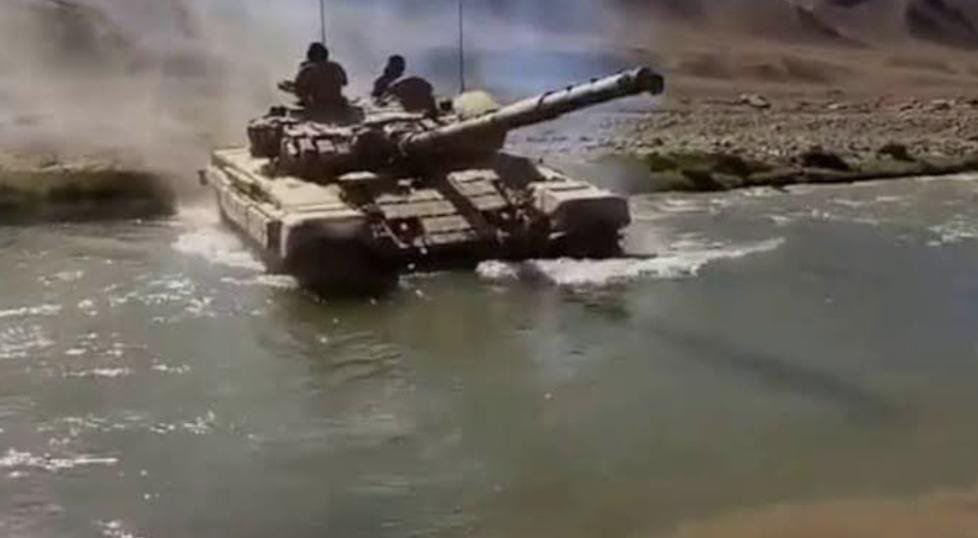
According to local police and district officials, the incident took place during a scheduled military exercise where an armored tank unit was practicing canal-crossing procedures—one of the most challenging combat manoeuvres for mechanized forces.
As the tank rolled into the canal to simulate a crossing, it suddenly lost stability, slipped deeper into the water, and became stuck. The rapid flow and depth of the canal—estimated to be around 25 to 30 feet—caused the vehicle to submerge almost instantly.
Two soldiers were inside the tank at the time. One managed to escape by opening the hatch and swimming out, but the second soldier remained trapped as the tank sank quickly under the heavy hydraulic pressure of the canal’s water. Despite immediate alerts and rescue efforts, the trapped soldier could not be saved.
Rescue Efforts and Recovery
Specialized rescue teams from the Police, State Disaster Response Force (SDRF), and Civil Defence units rushed to the scene after being alerted by military personnel. Divers were deployed immediately, but the depth, strong water flow, and low underwater visibility posed significant challenges.
After hours of continuous effort, the submerged tank was identified and the soldier’s body was finally recovered in the afternoon. His remains were taken for postmortem examination, and the Army has begun formal procedures to notify his family.
The identity of the deceased soldier has been withheld until official protocols are completed.
Initial Investigations Underway
Authorities have begun preliminary investigations to determine what led to the sudden sinking. Early reports suggest that while necessary equipment and safety protocols were in place, the combination of slippery slopes, water pressure, and unexpected terrain conditions may have contributed to the incident.
The Indian Army has not yet issued an official detailed statement, but sources indicate that a Court of Inquiry has been initiated to examine:
- Tank stability and technical condition before entering the canal
- Water current patterns at the crossing point
- Whether safety ropes or support vehicles were available
- The preparedness of the crew for underwater emergencies
Experts believe that even minor miscalculations during water-crossing exercises can lead to severe consequences due to the heavy weight of tanks and unpredictable behaviour of flowing water.
A Look at the Risks Involved in Such Drills
Crossing rivers, canals and other water bodies forms an integral part of mechanized warfare training, particularly for armored units that must be prepared for real combat situations. However, these drills carry inherent risks:
1. Environmental Unpredictability
Water levels, depth, mud layers, and underwater obstacles can change rapidly.
2. Heavy Machinery
Tanks weigh several tonnes and can sink swiftly if not perfectly balanced during entry.
3. Limited Escape Time
Once submerged, pressure on hatches and narrow interior space gives soldiers only seconds to escape.
4. Specialized Training Required
Even well-trained crews can face life-threatening challenges if conditions shift unexpectedly.
The Rajasthan tragedy has once again highlighted the need to reassess safety measures during high-risk drills, especially in regions like Sri Ganganagar where canals are deep, wide, and carry fast-moving water.
Shock and Mourning Across the Region
The tragic death of the soldier has triggered a wave of grief, both among Army personnel and local residents who witnessed the rescue efforts. Local villagers gathered around the canal banks throughout the day, hoping for the soldier’s safe recovery before the grim confirmation arrived.
Officials expressed sorrow over the incident and promised a fair and transparent inquiry. The sacrifice of the soldier—who lost his life not in combat but while preparing to defend the nation—has been acknowledged with deep respect.
A Reminder of the Risks Soldiers Face Every Day
While the public often recognizes the dangers faced by members of the armed forces during war or border operations, this incident is a stark reminder that even routine training exercises come with life-threatening risks.
From tanks to aircraft, soldiers engage with high-risk machinery and complex environments daily to remain battle-ready. Their dedication ensures national security, often at the cost of personal safety.
What Happens Next?
- A formal inquiry report is expected in the coming days
- The Army will release official details after contacting the soldier’s family
- Safety protocols for amphibious and canal-crossing drills may undergo review
- The submerged tank will likely be retrieved using heavy-lift cranes and military engineering equipment
Conclusion
The Rajasthan tank accident is a painful incident that underscores the unpredictability and dangers involved in military preparedness. As investigations continue, the nation mourns the loss of a brave soldier who gave his life in service—demonstrating once again that the path of duty is filled with both honour and immense risk.
Resource: The Times of India

Pingback: Health ATM Launched for BSF Jawans in Jaisalmer, Bringing High-Tech Medical Support to India’s Border Warriors - Hindvaacha
Pingback: जैसलमेर में बीएसएफ जवानों के लिए शुरू हुआ हेल्थ ATM, सीमा पर मिलेगी हाई-टेक स्वास्थ्य सुविधा - Hindvaacha