

Sheikh Hasina’s Death Sentence Shakes Bangladesh and Tests India’s Diplomatic Nerves
Hindvaacha.com | Special Report
Bangladesh has been plunged into one of the most turbulent moments in its modern political history after former Prime Minister Sheikh Hasina was sentenced to death in absentia on 17 November 2025 by the International Crimes Tribunal–Bangladesh (ICT-BD). The conviction, tied to her government’s alleged role in the 2024 student uprising crackdown, has unleashed a wave of political, diplomatic and security ripples across South Asia — with India standing at the very center of the geopolitical storm.
For India, where Hasina has lived in exile since August 2024, the verdict is not just a foreign affairs development. It is a strategic, legal, humanitarian and security challenge, all unfolding at once.
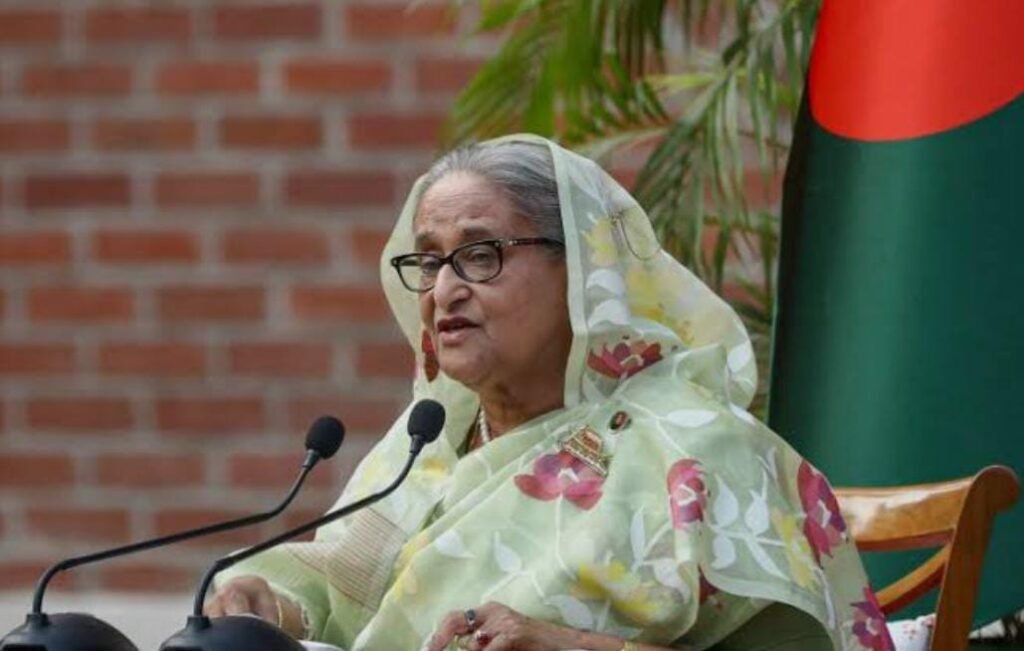
A Historic and Controversial Verdict
The ICT-BD found Hasina guilty of crimes against humanity, accusing her of ordering and enabling lethal force against student protesters during the massive 2024 uprising. The tribunal cited the use of drones, helicopters and live ammunition by state forces, violence that rights groups say caused hundreds — possibly more than a thousand — deaths.
Hasina has denied all charges, calling the tribunal “politically motivated” and a “revenge trial.” But the interim government in Bangladesh, led by Nobel laureate Muhammad Yunus, has defended the trial as a crucial step toward “justice and accountability.”
The verdict was delivered amid an atmosphere of extreme tension in Dhaka. Security forces were deployed in large numbers, expecting unrest — and unrest came swiftly.
Nationwide Unrest: Bangladesh on the Edge
News of Hasina’s conviction triggered immediate protests in several Bangladeshi cities. Demonstrators clashed with security personnel, with reports of arson attempts, stone-pelting, and tear-gas shelling. Certain areas also witnessed bomb blasts and coordinated vandalism by pro-Hasina groups.
The streets of Dhaka, Chittagong and Sylhet remain under heightened surveillance. Analysts fear that polarisation in Bangladesh is deepening and may push the country toward a prolonged phase of instability.
The interim government has formally requested India to extradite Sheikh Hasina — a move that has set the stage for complex diplomatic negotiations.
India Caught in a Diplomatic Crossfire
India now finds itself in a politically sensitive position. On one side is Bangladesh’s interim administration seeking Hasina’s extradition; on the other is Hasina herself, a long-time ally of New Delhi who sought refuge on Indian soil during the 2024 political crisis.
India must now decide whether to:
1. Extradite Hasina
A move that would severely strain human-rights expectations due to:
- the death penalty involved,
- questions about due process in a trial held in absentia, and
- rising international concern from the United Nations and Western governments.
2. Refuse or delay extradition
This would upset the interim government in Dhaka, possibly pushing Bangladesh closer to other regional powers (like China or Turkey), and may temporarily cool bilateral ties.
3. Take a legalistic middle path
India could frame its decision around:
- constitutional protections,
- international law,
- and India’s legal bar on extraditing individuals who face the death penalty unless assurances are given.
This option seems the most likely, but it will prolong tensions.
Legal Roadblocks: Why Extradition Won’t Be Easy
India and Bangladesh have an extradition treaty, but several key legal issues stand in the way:
- Death Penalty — Indian courts usually seek assurances that the death penalty will not be carried out before approving extradition.
- Trial in Absentia — International human-rights standards require that the accused be given a fair opportunity to defend themselves.
- Political Nature of the Crime — Extradition cannot be granted if charges appear politically driven.
- Possibility of UN Intervention — The OHCHR has already expressed concerns about the fairness of proceedings.
If India extradites Hasina without due safeguards, it could face global criticism for enabling the execution of a former prime minister following a contested trial.
India–Bangladesh Relations at a Crossroads
India and Bangladesh share one of South Asia’s most important bilateral relationships — covering security cooperation, water sharing, trade, energy connectivity and counterterrorism. However, Hasina’s conviction and Dhaka’s aggressive extradition request have created unprecedented strain.
Depending on India’s response, the relationship could take one of several directions:
A. Controlled Tension
India delays a decision while quietly negotiating with Dhaka.
This keeps communication alive but prolongs friction.
B. Diplomatic Breakdown
A firm refusal to extradite could lead to a sharp downturn in ties, potentially affecting border management, river agreements, and security cooperation.
C. Quiet Compromise
Bangladesh may offer written assurances regarding the sentence in exchange for India’s cooperation, easing the legal burden.
Whatever option unfolds, New Delhi’s choices will shape South Asian politics for years.
Security Concerns Along the India–Bangladesh Border
A destabilized Bangladesh raises real security risks for India:
- Potential refugee inflows into West Bengal, Assam and Tripura.
- Militant activity exploiting political chaos.
- Smuggling and cross-border crime increasing due to weakened local governance.
- Radicalization risks if extremist groups exploit post-verdict anger.
India is already monitoring border districts closely, anticipating a turbulent few months.
Hasina’s Political Future
Despite the death sentence, Hasina remains a powerful political figure in Bangladesh. Her supporters view the verdict as a political conspiracy. Her Awami League may be weakened but not defeated; if instability worsens, her return to politics might grow more likely, especially if fresh elections yield unexpected outcomes.
For now, she is expected to appeal the judgment, but she can do so only if she returns to Bangladesh — something she is unlikely to risk.
Conclusion: A Defining Moment for South Asia
Sheikh Hasina’s death sentence is more than a legal verdict — it is a political earthquake. Bangladesh faces deep uncertainty, and India is thrust into a complex diplomatic challenge where every move carries far-reaching consequences.
As Dhaka demands extradition and international pressure mounts, India must balance diplomacy, legality, morality and strategic interests with utmost caution.
One thing is certain: South Asia is entering a new, unpredictable chapter — and India will be one of the decisive players shaping what comes next.
Resource:
The Guardian, Al Jazeera, NDTV, The Economic Times
More Articles – Islamabad Court Bomb Blast: 12 Killed, Dozens Injured in Pakistan’s Capital – Hindvaacha
“Nepal Strikes Bold Deal: Chinese Firm to Print Rs 1,000 Banknotes” – Hindvaacha