

🧩 How Microplastics Impact Our Lives: The Hidden Dangers of Tiny Pollutants
Published by: Hindvaacha Environment Desk | Date: November 2025
🌍 Understanding Microplastics
Beneath the surface of daily life lies an unseen danger: Microplastics
These are tiny fragments of plastic, often less than 5 millimeters in size, found everywhere — in the oceans, soil, food, and even our bodies. In our modern, fast-paced world, plastic has become a symbol of convenience — but also of crisis.
Microplastics come in two main forms:
- Primary microplastics – intentionally produced for cosmetics, toothpaste, and industrial use.
- Secondary microplastics – created when larger plastic items like bottles and bags break down over time.
These particles are impossible to eliminate completely once they enter the environment, making them one of the world’s most persistent pollutants.
🌊 Microplastics in the Environment
Microplastics are now found from the depths of the Mariana Trench to the peaks of Mount Everest. Their widespread presence has turned plastic pollution into a global crisis.
- In Oceans: Billions of microplastic particles float across the seas, entering the food chain through fish, shellfish, and plankton.
- In Soil: Plastic waste and synthetic fertilizers contribute to the contamination of agricultural fields, reducing soil fertility.
- In the Air: Microfibers from synthetic clothes and vehicle tires mix with dust, allowing humans to inhale plastics unknowingly.
Even rainwater samples have been found to contain microplastic fibers — proving that no part of Earth is untouched.
🧠 Impact on Human Health
Recent studies have confirmed that microplastics have made their way into human blood, lungs, and placenta, raising major concerns.
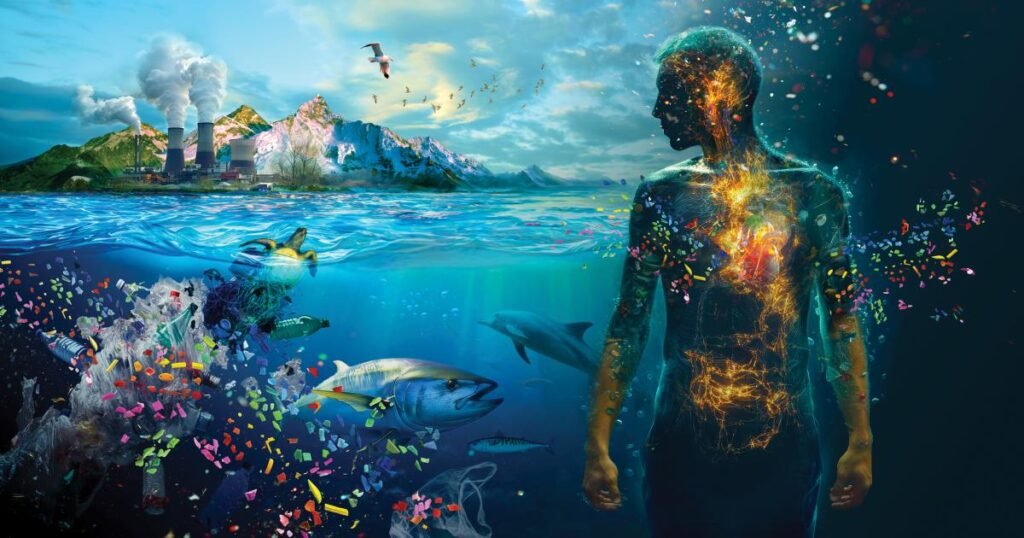
Key health impacts include:
- Inhalation and Ingestion: We consume microplastics through air, water, and food — particularly seafood, table salt, and bottled water.
- Chemical Toxins: These plastics carry harmful chemicals such as BPA (Bisphenol A), phthalates, and heavy metals that can disrupt hormones, weaken the immune system, and cause developmental problems.
- Cellular Damage: Long-term exposure can lead to inflammation, oxidative stress, and DNA damage, increasing risks of chronic diseases.
While research is ongoing, scientists warn that microplastic exposure could become a silent health epidemic if unchecked.
🐠 Microplastics and Marine Life
Marine ecosystems bear the brunt of this crisis. Tiny fish and plankton mistake microplastics for food, filling their stomachs with indigestible materials. Over time, this leads to malnutrition, infertility, and death.
What’s worse is bioaccumulation — as smaller creatures are eaten by larger predators, microplastics move up the food chain. Eventually, they reach humans through seafood consumption.
This means that the fish on our plate might already contain microscopic plastic pieces, making the pollution problem deeply personal.
💰 Economic and Ecological Impact
Microplastic pollution is not just an environmental issue — it’s also an economic disaster in the making.
- Fishing and Tourism Industries: Declining marine health reduces fish populations and deters tourists from polluted beaches.
- Agriculture: Contaminated soil affects crop quality and productivity.
- Waste Management Costs: Governments spend billions tackling plastic waste, while industries struggle to shift to sustainable packaging.
Additionally, microplastics hinder the ocean’s ability to absorb carbon, weakening our planet’s natural defense against climate change.
🌱 How We Can Reduce Microplastic Pollution
Though the challenge seems massive, individual and collective action can make a real difference.
🧭 Steps You Can Take:
- Avoid Single-Use Plastics: Replace plastic bottles, bags, and straws with eco-friendly alternatives.
- Wash Clothes Mindfully: Synthetic fabrics release microfibers. Use filters or washing bags to trap them.
- Choose Natural Materials: Opt for cotton, jute, or bamboo over polyester and nylon.
- Support Plastic Bans: Encourage local and national policies restricting microbeads and single-use plastics.
- Raise Awareness: Share credible information to help others make conscious choices.
Collective awareness is the first step toward a cleaner, safer, and sustainable world.
🌐 A Global Call to Action
Microplastic pollution demands global cooperation. Governments must enforce strict recycling regulations, industries should invest in biodegradable alternatives, and consumers need to embrace eco-conscious living.
International partnerships like the UN Environment Programme’s Plastic Pollution Treaty and grassroots campaigns worldwide are already taking shape — but sustained efforts are crucial to win this battle.
🔚 Conclusion
Microplastics are the invisible enemies of modern civilization, quietly invading our air, water, and food. They remind us that human progress cannot come at the cost of planetary health.
To safeguard our future, we must rethink our relationship with plastic — replacing short-term convenience with long-term responsibility.
Each time you refuse a plastic straw or choose a cloth bag, you’re not just making a small choice — you’re taking a stand for a cleaner Earth.
🌿 Related Articles
- India’s Efforts for a Cleaner Ocean Initiative
- PM Modi on Blue Economy and Sustainable Growth
- © 2025 Hindvaacha.com | Environment & Sustainability Desk